
Safeguards For Seniors

Seniors face cybersecurity dangers like phishing, scams, and identity theft, often targeted due to assumed savings and limited tech experience. Staying alert and using security measures helps protect their personal and financial information.
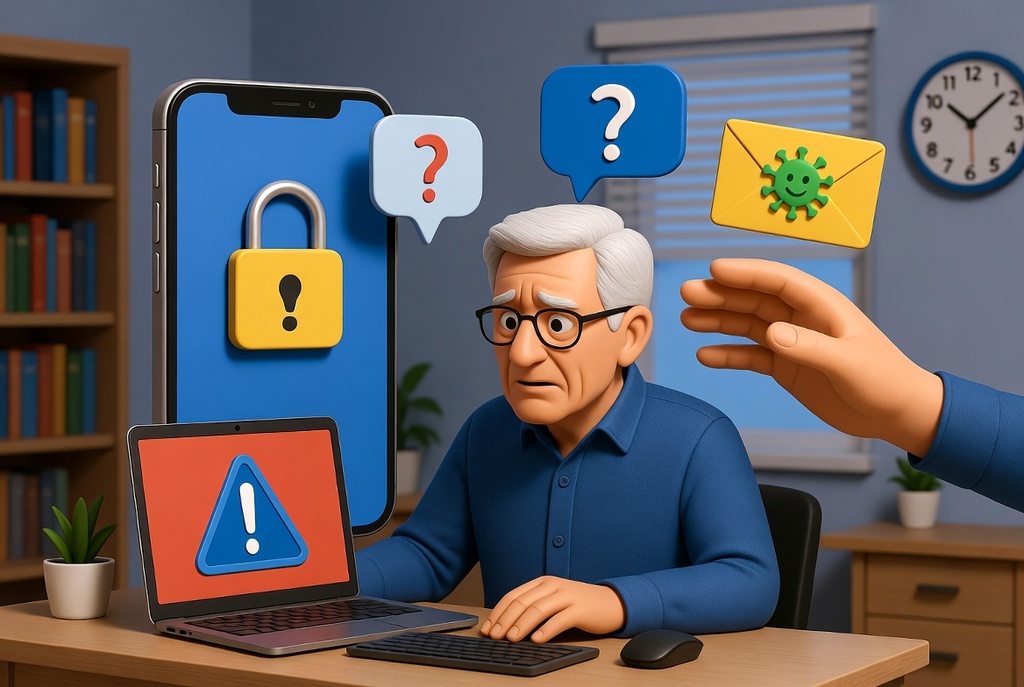
Beware of Scams

Seniors are frequently targeted by scammers who assume they have retirement savings, may be less familiar with technology, and tend to trust others more easily. Common scams include fraudulent calls or messages claiming to be from a bank, Medicare, or even a grandchild in distress. These schemes can lead to financial loss and personal information theft if precautions aren’t taken.

Assign a Bank Trusted Contact

A bank trusted contact adds an extra layer of protection to help prevent scams. This is someone you choose, such as a family member or close friend, whom your bank can reach if they notice suspicious activity, like an unusual withdrawal or transfer. Having a trusted contact allows the bank to pause and verify that the transaction is legitimate, reducing the risk of fraud.

Keep Your Devices Updated

Keeping your devices updated is crucial for security, as updates often fix vulnerabilities that hackers could exploit. Without these updates, devices become more susceptible to malware, ransomware, and other cyberattacks. Regular updates help protect personal information, financial data, and sensitive communications, ensuring your devices remain safe and functional. Staying current with updates is a simple but highly effective step in maintaining digital security.